Department of Computer Science and Engineering (IOT)
IIoT stands for the Industrial Internet of Things or Industrial IoT that initially mainly referred to an industrial framework whereby a large number of devices or machines are connected and synchronized through the use of software tools and third platform technologies in a machine-to-machine and Internet of Things context, later an Industry 4.0 or Industrial Internet context.
About Department
At Yeshwantrao Chavan College of Engineering (YCCE), our Department of Computer Science and Engineering – Internet of Things, established in 2022, reflects our commitment to academic excellence and innovation in emerging technologies.
Our industry-aligned curriculum, enriched with core and elective courses, equips students with the skills required to excel in dynamic IT and research environments. We promote holistic development through active student bodies like the ACM Student Chapter, CTSC, and Coding Club YCCE, fostering technical, co-curricular, and coding excellence.
The department is actively involved in research and consultancy projects, supported by funding from multinational companies and government bodies such as AICTE, DST, and E & ICT. Our faculty contribute significantly to academia through FDPs, publications, and innovation-driven initiatives.
Join us at YCCE’s Department of CSE – IoT and be part of a future-focused learning environment where technology, innovation, and excellence converge.
IIoT is an important part of what is described as the Fourth Industrial Revolution. In a manufacturing environment, IIoT is also the key to the development in predictable maintenance, zero-failure vision and improved efficiency in maintenance and service, energy management and asset tracking.
Major industries include oil and gas, transportation, manufacturing, healthcare and energy, mining and metals, aviation but they are certainly not the only ones. Many use cases in government (smart cities) and agriculture, for instance, are also seen as IIoT.
Vision
To be a preferred hub for nurturing computer engineering aspirants through innovative, ethical, value-based technical education, impactful research, and industry collaboration, to become successful professionals contributing for the betterment of society.
Mission
To nurture computer engineering professionals by offering:
- Dynamic learning environment that encourages problem-solving using emerging technology
- National Education Policy aligned evidence-based technical education, fostering innovation, research, and industry–institute collaboration
- Holistic, ethical and sustainable development for lifelong success.
Program Educational Objectives of the program (PEO)
- PEO 1 – Preparation: To prepare students to succeed in employment/profession and/or to pursue post graduate and research educations in Computer Technology discipline in particular and allied engineering disciplines in general. (Preparation)
- PEO 2 – Core Competence: To provide students with a solid foundation in mathematical, scientific and engineering fundamentals required to formulate, analyse and solve engineering problems requiring knowledge of Computer Technology. (Core Competence)
- PEO 3 – Breadth: To prepare students with engineering breadth to innovate, design, develop software products and to contribute in providing solutions related to multidisciplinary real life problems. (Breadth)
- PEO 4 – Professionalism: To inculcate in students professional and ethical attitude, effective communication skills and teamwork to become a successful professional. (Professionalism)
- PEO 5 – Learning Environment: To provide students with an academic environment that makes them aware of excellence and life-long learning in emerging technologies. (Learning Environment)
Program Outcomes
- PO1: Engineering Knowledge: Apply knowledge of mathematics, natural science, computing, engineering fundamentals and an engineering specialization as specified in WK1 to WK4 respectively to develop to the solution of complex engineering problems.
- PO2: Problem Analysis: Identify, formulate, review research literature and analyze complex engineering problems reaching substantiated conclusions with consideration for sustainable development. (WK1 to WK4)
- PO3: Design/Development of Solutions: Design creative solutions for complex engineering problems and design/develop systems/components/processes to meet identified needs with consideration for the public health and safety, whole-life cost, net zero carbon, culture, society and environment as required. (WK5)
- PO4: Conduct Investigations of Complex Problems: Conduct investigations of complex engineering problems using research-based knowledge including design of experiments, modelling, analysis & interpretation of data to provide valid conclusions. (WK8).
- PO5: Engineering Tool Usage: Create, select and apply appropriate techniques, resources and modern engineering & IT tools, including prediction and modelling recognizing their limitations to solve complex engineering problems. (WK2 and WK6)
- PO6: The Engineer and The World: Analyze and evaluate societal and environmental aspects while solving complex engineering problems for its impact on sustainability with reference to economy, health, safety, legal framework, culture and environment. (WK1, WK5, and WK7).
- PO7: Ethics: Apply ethical principles and commit to professional ethics, human values, diversity and inclusion; adhere to national & international laws. (WK9)
- PO8: Individual and Collaborative Team work: Function effectively as an individual, and as a member or leader in diverse/multi-disciplinary teams.
- PO9: Communication: Communicate effectively and inclusively within the engineering community and society at large, such as being able to comprehend and write effective reports and design documentation, make effective presentations considering cultural, language, and learning differences
- PO10: Project Management and Finance: Apply knowledge and understanding of engineering management principles and economic decision-making and apply these to one’s own work, as a member and leader in a team, and to manage projects and in multidisciplinary environments.
- PO11: Life-Long Learning: Recognize the need for, and have the preparation and ability for i) independent and life-long learning ii) adaptability to new and emerging technologies.
Program specific Outcomes (PSO)
- PSO1: An ability to analyse connected environments and design optimized, reliable, and sustainable IoT solutions using computational, communication, and sensing technologies.
- PSO2: An ability to innovate, research, and develop sustainable solutions using emerging IoT technologies, open-source tools, and interdisciplinary approaches addressing real-world and global challenges.
HoD Desk
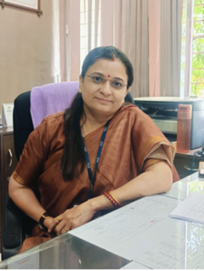
Dr. Kavita R. Singh
HOD, Department of Computer Technology
The Department of Computer Technology has consistently shown remarkable progress in academic achievements, placement outcomes, and research contributions. Our innovatively designed curriculum is regularly updated to reflect evolving industry demands and stakeholder expectations, ensuring relevance and rigor.
We emphasize a holistic approach to education, blending technical knowledge with the development of personal and professional skills. This balance equips our students to thrive in both corporate and research environments. Through cutting-edge pedagogical methods, students gain hands-on experience in domains highly valued by today’s industries and research organizations.
Our supportive learning environment is complemented by state-of-the-art infrastructure, including the NVIDIA Centre of Excellence Lab, which is equipped with advanced hardware and software for research in Artificial Intelligence (AI), Machine Learning (ML), Deep Learning (DL), Computer Vision (CV), Internet of Things (IoT), and more.
In collaboration with reputed companies, we offer a range of industry-aligned electives, providing students with a dynamic mix of core theoretical foundations and exposure to emerging technologies. Students are also involved in socially relevant initiatives, promoting values of responsibility and community engagement.
The department proudly hosts an approved ACM Student Chapter since 2008 fostering a vibrant coding culture. We encourage students to take initiative by organizing events such as Compufest, our national-level technical fest, and to actively participate in various technical and co-curricular events at other institutions.
Beyond academics, our students are also involved in socially relevant initiatives, promoting values of responsibility and community engagement.
Our alumni have secured positions in prestigious companies both in India and abroad, while many pursue higher education at renowned institutions such as IITs, IISc, and IIMs. These achievements reflect the department’s dedication to its founding vision—consistently striving to surpass corporate and research expectations.
Our graduates are widely recognized for their sincerity, intelligence, diligence, practical orientation, and effectiveness in diverse professional environments.
The department’s growing reputation is further reinforced by the increasing number of industries eager to collaborate, whether through academic partnerships, industry projects, or campus recruitment.
We warmly invite you to join us on our journey toward becoming a world-class center of excellence in education, training, and research.
Faculty
Sr. No. | Name of Faculty | Designation | Date of Joining | Nature of Association | Qualification |
1. | Prachi Gawande | Assistant Professor | 12/07/2024 | Regular | M.Tech. |
2. | Ashwini Gote | Assistant Professor | 17/7/2024 | Regular | M.Tech. |
3. | Kiran Khandare | Assistant Professor | 10/07/2025 | Regular | M.Tech. |
4. | Sandeep Lanjewar | Assistant Professor | 14/08/2025 | Regular | M.Tech. |
5. | Harsha R. Tembhekar | Assistant Professor | 10/07/2025 | Regular | M.Tech. |
6. | Neha Ingole | Assistant Professor | 10/07/2025 | Regular | M.Tech. |
7. | Sharmeen Saba M. Ahmed | Assistant Professor | 10/07/2025 | Regular | M.Tech. |
8. | Rina Parteki | Assistant Professor | 21/07/2025 | Regular | M.Tech. |
9. | Priya Kotewar | Assistant Professor | 23/7/2025 | Regular | M.Tech. |
10. | Puja Khangar | Assistant Professor | 25/07/2025 | Regular | M.Tech. |
Program offered
1 | UG Programme- B.Tech in Computer Science and Engineering- Internet of Things |
Laboratories
LAB NO. | LAB NAME | LAB INCHARGE |
Lab 1 | CSE-IOT Lab 1 | Prachi Gawande |
Lab 2 | CSE-IOT Lab 2 | Charvi Suri |
Lab 3 | CSE-IOT Lab 3 | Piyush Ingole |
Lab 4 | CSE-IOT Lab 4 | Sadaf Ansari |
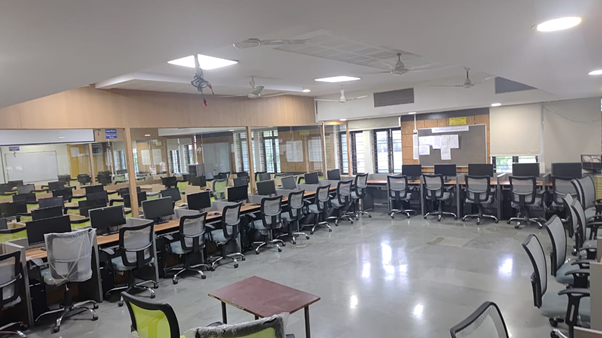
CSE-IOT Lab 3
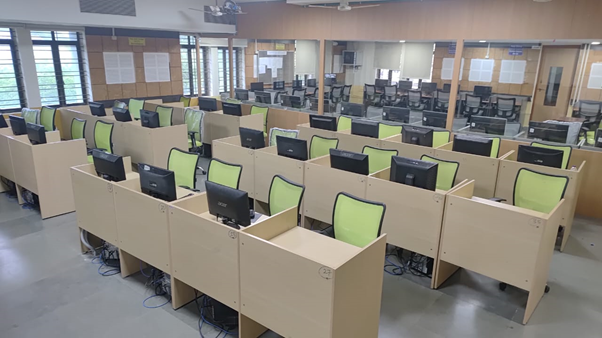
CSE-IOT Lab 2
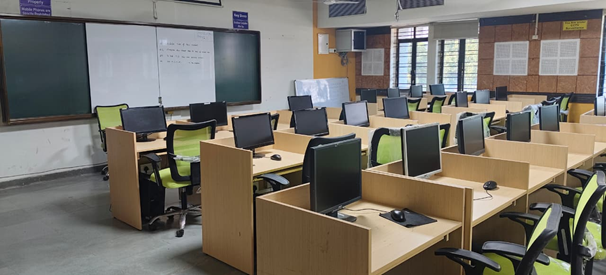
CSE-IOT Lab 1
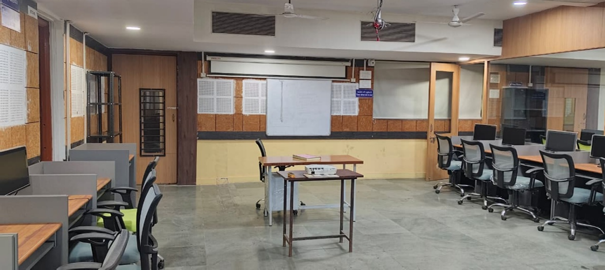
CSE-IOT Lab 4
Sr. No | Activity | Duration | Resource Person | No. of Participants | Department |
1 | 30 hrs VAC on “Future Factory Projects with Git, IoT, and Digital Twin” | 27-07-2025 to 08-11-2025 | Mr. Nikhil Tamrakar, P360 | 80 | CSE-IOT |
2. | 30 hrs VAC on “Logic Building and Problem Solving through C” | 27-07-2025 to 08-11-2025 |
| 75 | CSE-IOT |
3. | 30Hrs VAC on “loT for Smart Applications: From Concept to Deployment” | 22-03-2025 to 26-04-2025 | Dr. Piyush Ingole, YCCE | 63 | CSE-IOT |
Instructional Methods in Teaching Learning
Sr. No | Section | Innovative Method Adopted | Name of Faculty | Course Name | Sem | Outcome After Implementation | No. of Beneficiaries |
1 | A | GATE-Based Assignment | Shubhangi S. Shambharkar | TFCS | 5 | Students benefited through improved conceptual understanding and enhanced problem-solving skills in the subject. | 70 |
2 | A | Case Studies | Harsha R. Tembhekar | PE-IV (SPI) | 7 | Students gained better practical insight and application-oriented understanding of course concepts. | 35 |
3 | A | Video Creation | Harsha R. Tembhekar | CAO | 3 | Students improved their understanding of concepts through creative learning and effective content presentation. | 70 |
4 | A | Certification Course | Charvi Suri | Geo-Intelligence using Smart IoT Devices | 5 | Students benefited by gaining additional domain knowledge and exposure to emerging technologies. | 32 |
Value Added Programs
Sr. No | Activity | Duration | Resource Person | No. of Participants | Department |
1 | 30 hrs VAC on “Future Factory Projects with Git, IoT, and Digital Twin” | 27-07-2025 to 08-11-2025 | Mr. Nikhil Tamrakar, P360 | 80 | CSE-IOT |
2. | 30 hrs VAC on “Logic Building and Problem Solving through C” | 27-07-2025 to 08-11-2025 |
| 75 | CSE-IOT |
3. | 30Hrs VAC on “loT for Smart Applications: From Concept to Deployment” | 22-03-2025 to 26-04-2025 | Dr. Piyush Ingole, YCCE | 63 | CSE-IOT |
Best Practices
Sr. No. | Best Practices of the Department |
1. | NPTEL/SWAYAM Certification by students and Faculty : |
2. | Shadow Teaching by fast learners to slow learners. |
3. | Mentor-Mentee: |
4. | Academia- Industry/Research Organization Association: |
5. | Innovative Teaching Learning Method: |
Events
Years | No. of Events Conducted under ACM | No. of Events Conducted under CTSC | No. of Events Conducted under IEEE | Total Events Conducted |
2025-26 | 4 | 2 | 1 | 7 |
ODD Events 2025-26
Sr. No | Name of the activity | Type of Event | Date (DD-MM-YYYY) | Number of students participated |
1 | Opportunities and Challenges in Today’s Supply Chain | Technical | 25/08/2025 | 52 |
2 | Data-Driven Intelligence: Fuelling the Modern Information System | Technical | 15/10/2025 | 145 |
3 | VAC on Logic Building & Problem Solving | Technical | 11/10/2025 – 08/11/2025 | 75 |
4 | VAC on Future Factory Projects with Git, IoT and Digital Twin | Technical | 27/09/2025 – 08/11/2025 | 46 |
5 | Guest Lecture on IEEE Computer Society | Technical | 29/10/2025 | 65 |
6 | International Education Fair for Higher Studies | Non-Technical | 16/10/2025 | 49 |
7 | Advances in Data Structures | Technical | 08/11/2025 | 75 |
Achievements
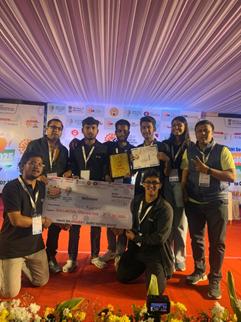
The Smart India Hackathon 2025 (Hardware Edition) was organized by AICTE in collaboration with the Ministry of Home Affairs, held on 8th to 12th December 2025 across India, Vedant Raut (Team Leader, 5th Sem AIDS), Ojas Satdeve (5th Sem IT), Atharva Chaudhari (3rd Sem ETC), Ayush Sahu (5th Sem AIDS), Tejasvi Jadhao (5th Sem IT) and Omkar Jadhav (5th Sem CSE IoT) won cash prize of Rs. 1,50,000/-, at Kolhapur Institute of Technology, Kolhapur.
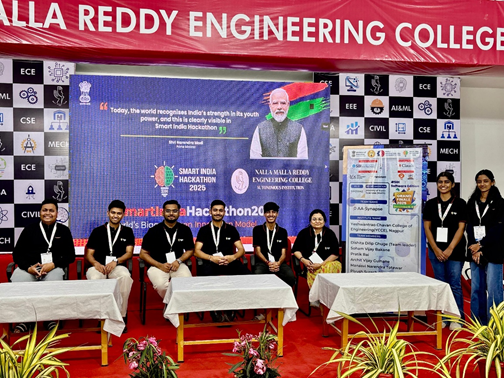
Smart India Hackathon (SIH) 2025, was organized by AICTE in collaboration with the Ministry of Education, held on 8th and 9th December 2025. Piyush Bhoyar (7th Sem CTech), Soham Bakane (7th Sem CTech), Pratik Rai (5th Sem CSE-IoT), Archit Gulhane (5th Sem CTech) were finalist at Nalla Malla Reddy College of Engineering, Hyderabad
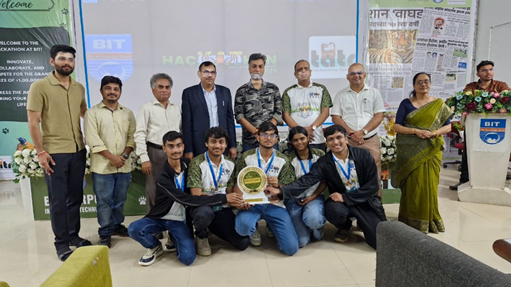
Swayam Thakur, Janhavi Deshmukh, Sujal Gabhane, 3rd sem CSE-IOT, winner 2nd prize in National Level HACKATHON : Innovation for Coexistence organized by Tadoba Andheri Forest Reserve(TATR) and BIT on 15-10-2025
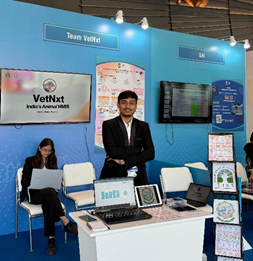
Sujal Gabhane, 5th sem IoT student, was runner-up for the Grand Finale of the National OneHealth Hackathon, for his team Idea VetNxt, India’s Animal HMIS at Bharat Mandapam, Pragati Maidan, New Delhi on 20th November 2025 and won cash prize of Rs. 50,000/-.
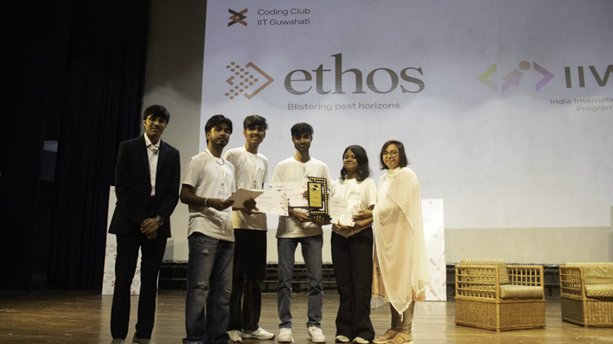
Anshul Kamthe, 3rd Sem CSE (IoT), runner-up in ethos hackathon at IIT Guwahati, on 24-10-2025.
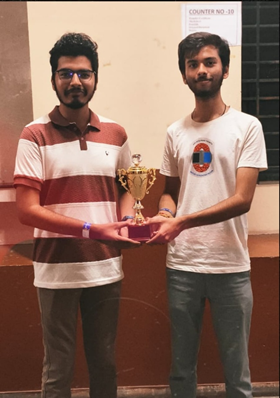
Arnav Tete and Ved Ganorkar, 5th CSE IOT, Won NASA SPACEAPPS CHALLENGE, at G.H. RAISONI Engineering and Management, Nagpur on 05-10-2025
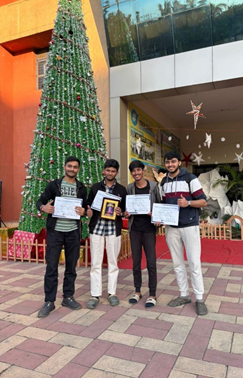
7th Sem CT students, Piyush Bhoyar, Priyanshu Behere, 5th Sem Ct student Archit Gulhane and 5th Sem IOT student Pratik Rai, Won Technex Hackathon of cash prize Rs. 50,000/- at St. Vincent Palloti college of Engineering Nagpur on 23-12-2025.