
Artificial Intelligence And Data Science
About Department
At Yeshwantrao Chavan College of Engineering (YCCE), our Department of Artificial Intelligence and Data Science, established in 2022, reflects our commitment to academic excellence and innovation in emerging technologies.
Our industry-aligned curriculum, enriched with core and elective courses, equips students with the skills required to excel in dynamic IT and research environments. We promote holistic development through active student bodies like the ACM Student Chapter, CTSC, and IEEE Computer Society, YCCE, fostering technical, co-curricular, and coding excellence.
The department is actively involved in research and consultancy projects, supported by funding from multinational companies and government bodies such as AICTE, DST, and E & ICT. Our faculty contribute significantly to academia through FDPs, publications, and innovation-driven initiatives.
Join us at YCCE’s Department of CSE – IoT and be part of a future-focused learning environment where technology, innovation, and excellence converge.
Data science is a comprehensive process that involves multiple steps for analyzing data and generating insights. Artificial intelligence makes use of computer algorithms to impart autonomy to the data model and emulate human cognition and understanding.
There are many search engines like Google, Yahoo, Bing, Ask, AOL, Duckduckgo etc. All these search engines make use of data science algorithms to deliver the best result for our searched query in fraction of seconds.
The entire digital marketing spectrum starting from the display banners on various websites to the digital bill boards at the airports – almost all of them are decided by using data science algorithms. This is the reason why digital ads have been able to get a lot higher CTR than traditional advertisements.
Getting suggestions about similar products on Amazon? They not only help you find relevant products from billions of products available with them, but also add a lot to the user experience.
Internet giants like Amazon, Twitter, Google Play, Netflix, Linkedin, Imdb and many more uses this system to improve user experience.
EA Sports, Zynga, Sony, Nintendo, Activision-Blizzard have led gaming experience to the next level using data science. Games are now designed using machine learning algorithms which improve / upgrade themselves as the player moves up to a higher level.
Airlines companies started using data science to identify the strategic areas of improvements. Now using data science, the airline companies can:
- Predict flight delay
- Decide which class of airplanes to buy
- Whether to directly land at the destination, or take a halt in between (For example: A flight can have a direct route from New Delhi to New York. Alternatively, it can also choose to halt in any country.)
- Effectively drive customer loyalty programs
Southwest Airlines, Alaska Airlines are among the top companies who’ve embraced data science to bring changes in their way of working.
Vision
To be a preferred hub for nurturing computer engineering aspirants through innovative, ethical, value-based technical education, impactful research, and industry collaboration, to become successful professionals contributing for the betterment of society.
Mission
To nurture computer engineering professionals by offering:
- Dynamic learning environment that encourages problem-solving using emerging technology
- National Education Policy aligned evidence-based technical education, fostering innovation, research, and industry–institute collaboration
- Holistic, ethical and sustainable development for lifelong success.
Program Educational Objectives of the program (PEO)
- PEO 1 – Preparation: To prepare students to succeed in employment/profession and/or to pursue post graduate and research educations in Computer Technology discipline in particular and allied engineering disciplines in general. (Preparation)
- PEO 2 – Core Competence: To provide students with a solid foundation in mathematical, scientific and engineering fundamentals required to formulate, analyse and solve engineering problems requiring knowledge of Computer Technology. (Core Competence)
- PEO 3 – Breadth: To prepare students with engineering breadth to innovate, design, develop software products and to contribute in providing solutions related to multidisciplinary real life problems. (Breadth)
- PEO 4 – Professionalism: To inculcate in students professional and ethical attitude, effective communication skills and teamwork to become a successful professional. (Professionalism)
- PEO 5 – Learning Environment: To provide students with an academic environment that makes them aware of excellence and life-long learning in emerging technologies. (Learning Environment)
Program Outcomes
- PO1: Engineering Knowledge: Apply knowledge of mathematics, natural science, computing, engineering fundamentals and an engineering specialization as specified in WK1 to WK4 respectively to develop to the solution of complex engineering problems.
- PO2: Problem Analysis: Identify, formulate, review research literature and analyze complex engineering problems reaching substantiated conclusions with consideration for sustainable development. (WK1 to WK4)
- PO3: Design/Development of Solutions: Design creative solutions for complex engineering problems and design/develop systems/components/processes to meet identified needs with consideration for the public health and safety, whole-life cost, net zero carbon, culture, society and environment as required. (WK5)
- PO4: Conduct Investigations of Complex Problems: Conduct investigations of complex engineering problems using research-based knowledge including design of experiments, modelling, analysis & interpretation of data to provide valid conclusions. (WK8).
- PO5: Engineering Tool Usage: Create, select and apply appropriate techniques, resources and modern engineering & IT tools, including prediction and modelling recognizing their limitations to solve complex engineering problems. (WK2 and WK6)
- PO6: The Engineer and The World: Analyze and evaluate societal and environmental aspects while solving complex engineering problems for its impact on sustainability with reference to economy, health, safety, legal framework, culture and environment. (WK1, WK5, and WK7).
- PO7: Ethics: Apply ethical principles and commit to professional ethics, human values, diversity and inclusion; adhere to national & international laws. (WK9)
- PO8: Individual and Collaborative Team work: Function effectively as an individual, and as a member or leader in diverse/multi-disciplinary teams.
- PO9: Communication: Communicate effectively and inclusively within the engineering community and society at large, such as being able to comprehend and write effective reports and design documentation, make effective presentations considering cultural, language, and learning differences
- PO10: Project Management and Finance: Apply knowledge and understanding of engineering management principles and economic decision-making and apply these to one’s own work, as a member and leader in a team, and to manage projects and in multidisciplinary environments.
- PO11: Life-Long Learning: Recognize the need for, and have the preparation and ability for i) independent and life-long learning ii) adaptability to new and emerging technologies.
Program specific Outcomes (PSO)
- PSO1: An ability to analyse real-world data-intensive problems to design innovative, optimized, and sustainable solutions using appropriate computational and statistical techniques.
- PSO2: An ability to develop AI and data-science-based software solutions by integrating security, privacy, and cost-effective considerations across diverse application domains.
HoD Desk
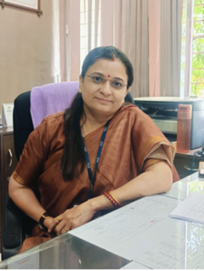
Dr. Kavita R. Singh
HOD, Department of Computer Technology
The Department of Artificial Intelligence and Data Science has consistently shown remarkable progress in academic achievements, placement outcomes, and research contributions. Our innovatively designed curriculum is regularly updated to reflect evolving industry demands and stakeholder expectations, ensuring relevance and rigor.
We emphasize a holistic approach to education, blending technical knowledge with the development of personal and professional skills. This balance equips our students to thrive in both corporate and research environments. Through cutting-edge pedagogical methods, students gain hands-on experience in domains highly valued by today’s industries and research organizations.
Our supportive learning environment is complemented by state-of-the-art infrastructure, including the NVIDIA Centre of Excellence Lab, which is equipped with advanced hardware and software for research in Artificial Intelligence (AI), Machine Learning (ML), Deep Learning (DL), Computer Vision (CV), Internet of Things (IoT), and more.
In collaboration with reputed companies, we offer a range of industry-aligned electives, providing students with a dynamic mix of core theoretical foundations and exposure
Faculty
Sr. No. | Name of Faculty | Designation | Date of Joining | Nature of Association | Qualification |
1. | Shubhangi Shambharkar | Assistant Professor | 03/11/2022 | Regular | M.Tech. |
2. | Sneha A. Sahare | Assistant Professor | 02/01/2023 | Regular | M.Tech. |
3. | Kalyani Karule | Assistant Professor | 01/07/2024 | Regular | M.Tech. |
4. | Mrs. Shweta A. Khalatkar | Assistant Professor | 01/07/2024 | Regular | M.Tech. |
5. | Sharayu Sangekar | Assistant Professor | 01/07/2024 | Regular | M.Tech. |
6. | Sneha Badhe | Assistant Professor | 12/07/2024 | Regular | M.Tech. |
7. | Charvi Suri | Assistant Professor | 15/07/2024 | Regular | M.Tech. |
8. | Sharayu Kawale | Assistant Professor | 10/07/2025 | Regular | M.Tech. |
9. | Sadaf A. Ansari | Assistant Professor | 10/07/2025 | Regular | M.Tech. |
10. | Radhika H. Tekade | Assistant Professor | 10/07/2025 | Regular | M.Tech. |
11. | Gousia Ahmed | Assistant Professor | 10/07/2025 | Regular | M.Tech. |
12. | Hrushikesh Panchabudhe | Assistant Professor | 10/07/2025 | Regular | M.Tech. |
13. | Nirmik Rathod | Assistant Professor | 10/07/2025 | Regular | M.Tech. |
Program offered
1 | UG Programme- B.Tech in Artificial Intelligence And Data Science |
Laboratories
LAB NO. | LAB NAME | LAB INCHARGE |
Lab 1 | AIDS Lab 1 | Shweta Khalatkar |
Lab 2 | AIDS Lab 2 | Dr. Supriya Thombre |
Lab 3 | AIDS Lab 3 | Sharayu Sangekar |
Lab 4 | AIDS Lab 4 | Kalyani Karule |
Lab 5 | AIDS Lab 5 | Dr.Hrishikesh Panchabudhe |
Lab 6 | AIDS Lab 6 | Sneha Badhe |
Instructional Methods in Teaching Learning
Sr. No | Section | Innovative Method Adopted | Name of Faculty | Course Name | Sem | Outcome After Implementation | No. of Beneficiaries |
1 | A | Live case study Presentation | Mrs.S.A.Khalatkar | OE III: Introduction To Engineering Psychology
| 5 | Improved understanding through real-life case analysis. | 70 |
2 | A | Certification-Based Learning | Shubhangi S. Shambharkar |
Deep Learning | 7 | Gained practical, industry-oriented skills. | 75 |
3 | A | Solve the numerical in Notebook | Radhika Harshal Tekade | PE V: Optimization Techniques | 5 | Enhanced numerical problem-solving accuracy. | 37 |
Value Added Programs
Sr. No | Activity | Duration | Resource Person | No. of Participants | Department |
1 | 30 hrs VAC on “Future Factory Projects with Git, IoT, and Digital Twin” | 27-07-2025 to 08-11-2025 | Mr. Nikhil Tamrakar, P360 | 80 | AIDS |
2. | 30 hrs VAC on “Logic Building and Problem Solving through C” | 27-07-2025 to 08-11-2025 | Mr. Vilas Dongre, Pryvoyance Technologies Pvt. Ltd. | 75 | AIDS |
3. | 30 hrs VAC on “Advance Python” | 10-02-2024 to 06-05-2024 | Mr. Nikhil Tamrakar, P360 | 40 | AIDS |
4. | 30Hrs VAC on “Advance Java” | 10-02-2024 to 06-05-2024 | Mr. Ahfaz Rahman, Project Manager, HCL | 102 | AIDS |
Best Practices
Sr. No. | Best Practices of the Department |
1. | NPTEL/SWAYAM Certification by students and Faculty : |
2. | Shadow Teaching by fast learners to slow learners. |
3. | Mentor-Mentee: |
4. | Academia- Industry/Research Organization Association: |
5. | Innovative Teaching Learning Method: |
Events
Years | No. of Events Conducted under ACM | No. of Events Conducted under CTSC | No. of Events Conducted under IEEE | Total Events Conducted |
2025-26 | 5 | 1 | 0 | 6 |
ODD Events 2025-26
Sr. No | Name of the activity | Type of Event | Date (DD-MM-YYYY) | Number of students participated |
1 | Opportunities and Challenges in Today’s Supply Chain | Technical | 25/8/2025 | 16 |
2 | Data-Driven Intelligence: Fuelling the Modern Information System | Technical | 15/10/2025 | 150 |
3 | VAC on Logic building &problem Solving | Technical | 27/09/2025 to 8/11/2025 | 102 |
4 | VAC on Future Factory Projects with Git Iot and Digital Twin | Technical | 27/9/2025 to 8/11/2025 | 46 |
5 | Industry Trends and Career development | Technical | 29/9/2025 | 70 |
Achievements
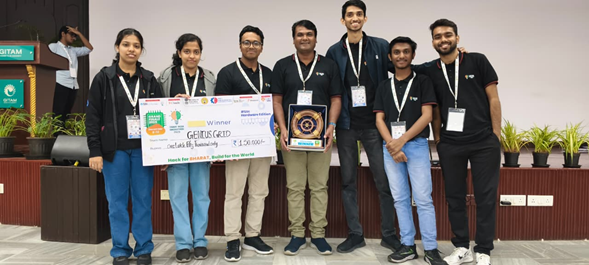
The Smart India Hackathon 2025 (Hardware Edition) was organized by AICTE in collaboration with the Ministry of Home Affairs, held on 8th to 12th December 2025 across India, at the Gitam University, Vishakapatnam, Andhra Pradesh, the nodal center. The team Genius Grid members are Partho Probodh Ghoshal (Team Leader) – CT, Bhushan Vinod More – CT, Darshan Bagade – CT, Kritish Bokde – AIDS, Debasrita Chattopadhyay – AIDS, won cash prize of Rs. 1,50,000/-.
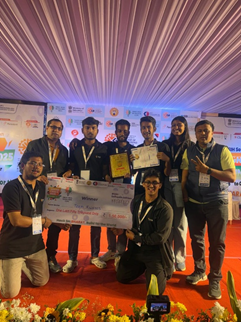
The Smart India Hackathon 2025 (Hardware Edition) was organized by AICTE in collaboration with the Ministry of Home Affairs, held on 8th to 12th December 2025 across India, Vedant Raut (Team Leader, 5th Sem AIDS), Ojas Satdeve (5th Sem IT), Atharva Chaudhari (3rd Sem ETC), Ayush Sahu (5th Sem AIDS), Tejasvi Jadhao (5th Sem IT) and Omkar Jadhav (5th Sem CSE IoT) won cash prize of Rs. 1,50,000/-, at Kolhapur Institute of Technology, Kolhapur.
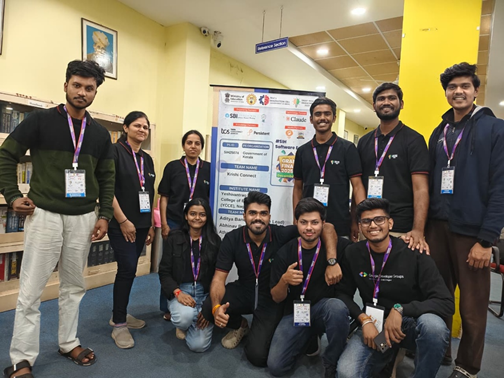
Smart India Hackathon (SIH) 2025, organized by AICTE in association with the Ministry of Education on 8th and 9th December 2025 at multiple locations across the country. The team members Aditya Bandawar, Atharva Shewale, Ashu Jenekar, Kartik Narule, Akshara Gaygaye, and Abhinav Rathod, all students of 7th Semester Computer Technology was finalist at G. H. Raisoni College of Engineering
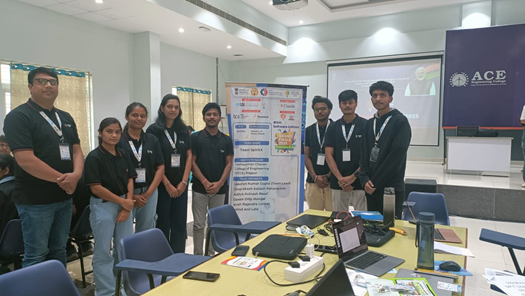
Smart India Hackathon (SIH) 2025, was organized by AICTE in collaboration with the Ministry of Education, held on 8th and 9th December 2025. Aditya Avinash Rasal (5th Sem AIDS), Deepa Dilip Mandal (5th Sem AIDS) and Kiran Rajendra Lonkar (5th Sem AIDS), was finalist at ACE Engineering College, Hyderabad
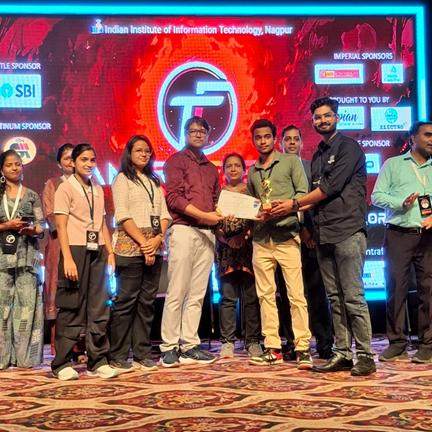
Krishna Mishra, Deepa Mandal, Nikita Dubey, Krishna Ghode, 5th Sem AIDS, Won Rs.10,000 cash prize, in Code Duelz – Tantrafiesta 2025, at IIIT Nagpur on 12-10-2025
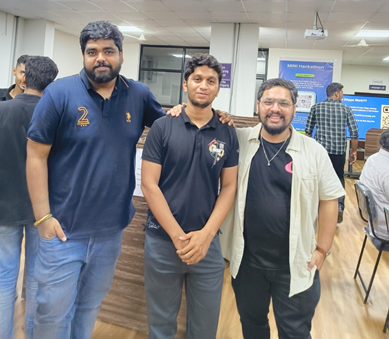
Akshad Gujarkar, 3rd sem AIDS, winner of cash prize $100, in hackathon SPARKS 2025 at Government college of engineering, Nagpur on 20-09-2025
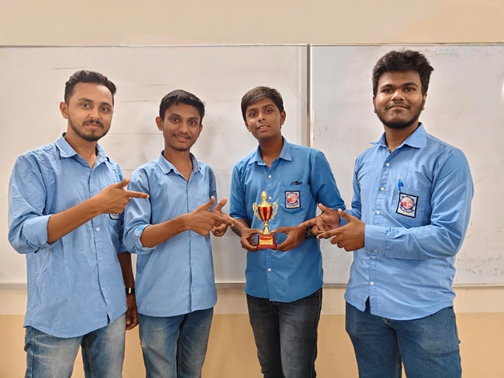
Kritish Bokde, Muchkundraje Thote, Prasad Hiwarkhede, Krushna Rathod, 5th sem AIDS, runner-up in NASA international space app challenge Hackathon at G.H. RAISONI Engineering and Management, Nagpur on 06-10-2025
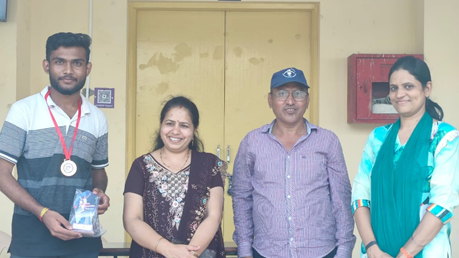
Vilas Rajesh Kadam, 3rd Sem AIDS, winner in Raftaar Event Badminton at G.H. Raisoni management and engineering college Nagpur on 19 September 2025
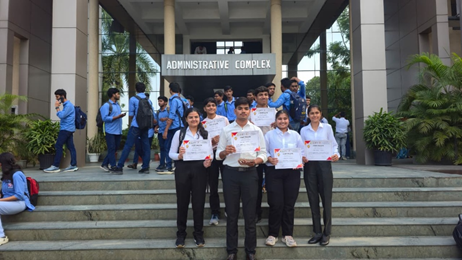
Gaurav Katre, Mohd. Junaid Naushahi, Kaiwalya Agham, Bhavna Varma, Sanskruti Zode, Riddhi Shedame, 3rd sem AIDS students won prize of Rs. 3000/- in Technology Business Incubator(TBI) Inter department Innovation Contest, YCCE, on 15 October 2025.
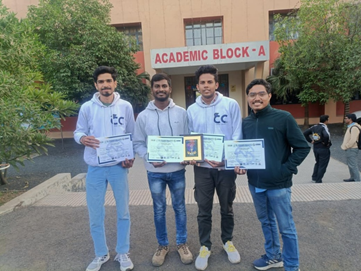
7th Sem aids students, Ansh Gupta, Abhilash Dhote, Sarvesh Veginwar, and Aman Giri—secured 1st position and won a ₹25,000 cash prize at Envision 2025–26, a 24-hour Datathon (Data Science Hackathon) as part of TECHNEX at St. Vincent Pallotti College of Engineering and Technology on 23-12-2025